While a new peace treaty has just been signed in Egypt to try to put an end to the war between Israel and Palestine, the choice of Cairo as a negotiation framework owes nothing to chance. Far from being a simple diplomatic host, Egypt is a central actor in the political history of the Middle East.
1949: The first Arab country to sign an agreement with Israel
Right after the creation of theState of Israelin 1948, a war breaks out between this new state and several neighboring Arab countries. This is called the first Arab-Israeli war. It leaves thousands dead and causes the exodus of hundreds of thousands of Palestinians. At the time, theEgypt sends its troops to Palestine to support the Palestinian Arabs and opposes militarily to Israel.
After several months of fighting, Egypt and Israel agree to end the war. THE February 24, 1949they sign a armistice agreement on the island of Rhodes (in Greece), under the supervision of the United Nations (UN). This agreement does not yet officially recognize Israelbut it sets ceasefire lines and demonstrates a desire to calm tensions.
Egypt becomes the first Arab country to enter into an official agreement with Israelwhich shows that she is ready to use diplomacy in addition to military force. This gesture marks the beginning of Egypt’s role as central actor in Middle East conflictsbut also in future attempts at peace. This armistice already places Egypt in heart of regional negotiationsa role she would continue to play for decades to come.
1978: Egypt, first Arab country to officially recognize Israel
In September 1978, after years of tensions and warsthe Egyptian president Anwar el-Sadat and the Israeli Prime Minister Menachem Begin meet at UNITED STATES, has Camp Davidan isolated presidential residence. US President Jimmy Carter organized and supervised the meeting, playing a central role as mediator during 13 days of intensive negotiations. These discussions led to the signing of two major chordsknown asCamp David Accords.
These agreements are historic for two main reasons. Egypt becomes the first Arab country to officially recognize the existence of Israel. This is an extremely strong act, in a context where the majority of the Arab world still rejects the legitimacy of the Israeli state. In exchange, Israel undertakes to fully return Sinai to Egypta strategic territory lost during the Six Day War in 1967. The signatories of the agreements also commit to granting future autonomy to Palestinians in the West Bank and Gaza. Even if the parties concerned will never fully implement this provision, it marks a turning point in the way international negotiators take the Palestinian issue into account.
These agreements show that Egypt is no longer just a military power, but a political actor capable of changing the regional balance through diplomacy. It opens the way to other peace processes in the region, even if these will be later and more fragile. However, this decision cost Egypt dearly politically. She is suspended from the Arab League until 1989, and President Sadat is criticized or even rejected in much of the Arab world for having “betrayed” the Palestinian cause.
1979: Egypt–Israel Peace Treaty
THE March 26, 1979Egypt and Israel sign a historic peace treatyunder the aegis of the American president Jimmy Carter. This agreement is a direct result of Camp David Accords signed the previous year. This is the first time in history that one Arab country officially recognizes the State of Israel and agrees to establish full diplomatic relations with him.
In exchange, Israel undertakes to withdraw all military forces from Sinaia territory that it had occupied since the Six-Day War in 1967. Israel gradually withdrew its troops, and completely completed this withdrawal in 1982. This return of Sinai to Egypt is a strong gesture of peacebecause it is a strategic territory, rich in resources and close to Israel. Egypt shows that it now favors diplomacy over warbecoming a normalization example in a region marked by conflicts. This treaty also paves the way for other future agreementseven if no Arab country will immediately follow this example.
But this decision also has difficult consequences for Egypt. She is ostracized from the Arab world. Pseveral countries break off their relations with it, and Egypt is excluded from the Arab League for 10 years. Inside the country, the president Anwar el-Sadat is violently criticizednotably by Islamists and supporters of the Palestinian cause. He will be murdered in 1981 by extremists opposed to this peace policy.
The 1979 peace treaty ended 30 years of war between Egypt and Israel, and made Egypt a key diplomatic player in the Middle Eastcapable of break with the logic of conflict to initiate a peace process. A role that she continues to play today.
2005: Sharm el-Sheikh Summit
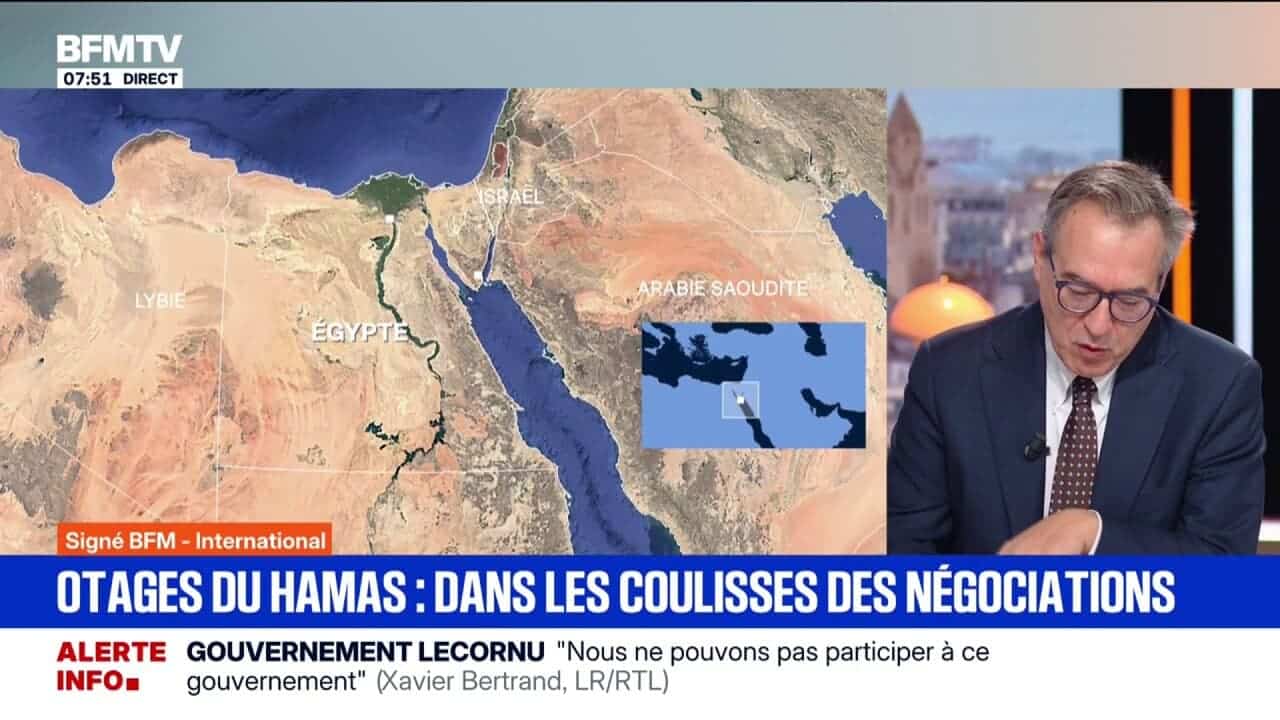
On February 8, 2005, Egypt organized an international summit in the seaside town of Sharm el-Sheikh, located on the Red Sea. Around the table, four major players in the region: theEgypt, Israelthere Jordan and thePalestinian Authority. The goal is to officially end the Second Intifadaa period of violent clashes between Palestinians and Israelis which has lasted since the year 2000 and has left thousands dead, mostly Palestinians.
This summit marks a break in violence. The President of the Palestinian Authority, Mahmoud Abbasand the Israeli Prime Minister, Ariel Sharon, mutually commit to a ceasefirewhich temporarily eases tensions. Egypt plays a role of active mediator. She welcome discussionsfacilitates exchanges, and shows that it remains a respected interlocutor of both campseven years after the 1979 peace treaty. It is also a key moment in regional politics, because it revives the idea of dialogue instead of confrontation, and restores a central place to Egypt in the Israeli-Palestinian peace processesat a time when few Arab countries are playing this role.
Finally, this summit is being held in a particular context. Israel is preparing to withdraw from the Gaza Strip (which he did a few months later, in August 2005), and sought regional support to ensure a more stable transition.
In summary, the Sharm el-Sheikh summit shows that Egypt is not just a former adversary turned ally of Israelbut a sustainable diplomatic actorcapable of hosting negotiations, of reestablish communication channels and of promote a return to calm in a region in permanent crisis.
Also read: Why is the USA the historic ally of Israel?
2025: Trump’s peace plan
The Egyptian city of Sharm el-Sheikh hosts this Monday, October 13, a International Peace Summit co-chaired by Egyptian President Abdel Fattah al-Sissi and US President Donald Trump. This historic summit brought together leaders from more than 20 countriesincluding Israel, Francethe United Kingdom, Germany, Spain, Italy, and representatives of the European Union. The goal is to end hostilities, pave the way for lasting stability in the Middle East, and begin the implementation of a multi-step peace plan.
This summit marks the official validation of the first phase of a peace plan developed by Donald Trumpin coordination with Egypt, Qatar and Turkey. This plan provides an immediate ceasefire, the release of the hostages, a gradual withdrawal of Israeli troops from Gazaand the launch of a international supervisory mechanismin conjunction with the United Nations.
Among the supporters affirmed for this plan, French President Emmanuel Macron went there to “mark France’s full support for this agreement“He also recalled that Paris would play an active role alongside the Palestinian Authorityemphasizing the need for a lasting political solution. The last minute participation of the Israeli Prime Minister Benjamin Netanyahuinitially announced as improbable, ultimately strengthened the diplomatic significance of the summit.
This summit shows once again the central role of Egypt as a land of mediation in the major issues of the Middle East, almost 50 years after the 1979 peace treaty with Israel. It also illustrates a rare international desire to relaunch a political dialogue, after years of blockage and violence.