This Wednesday, December 10, UNESCO officially inscribed Diwali, also called Deepavali, on its Representative List of the Intangible Cultural Heritage of Humanity. The opportunity to present to you five festivals that are part of UNESCO’s cultural heritage.
Certain festivals in the world and traditions are living pillars of the history and identity of peoples. Listed among the intangible heritage of humanity, they bear witness to the world’s cultural richness and diversity. Here are five examples.
1 – Durga Puja in Kolkata
Since 2021, Durga Pujacelebrated mainly at Calculetta (India) but also in other regions and within the diasporais registered with UNESCO Intangible Heritage List. This celebration of ten days honored the Hindu goddess Durga and celebrates, beyond the religious, a powerful community renewal and artistic. Artisans sculpt for weeks from clay taken from the Ganges. They form monumental statues of the goddess and her family.
Also read: What is the purpose of being listed as a UNESCO World Heritage Site?
They are then installed in “pandals” (pavilions) decorated. These are truly ephemeral works but of great magnitude. At nightfall, the city lights uptraditional music resonates and worshipers and visitors flock. We then witness a collective party where social divisions, religion and origin fade.
2 – The Kutiyattam theater
From 2008THE Kutiyattam is inscribed on the UNESCO Representative List of Intangible Cultural Heritage. It is a classical theater in Sanskrit language originating from Kerala (India). This theater, almost two millennia oldis one of the oldest live dramatic arts in the world still practiced today. Kutiyattam performances combine songs, painted faces, masks…
It’s a style ritualized dramatraditionally played in temples. The art of gesture, recitation, music, memory and transmission from master to disciple survive thanks to the devotion of artists and communities. Formerly reserved for particular castes or groups, Kutiyattam has become democratized. It now opens to a wider audiencewhich today simplifies the transmission of ancient know-how and the discovery of tradition.
3 – The great pilgrimage of Kumbh Mela
THE Kumbh Mela is one of the greatest peaceful gatherings of pilgrims in the world. He has been registered since 2017 on the UNESCO Representative List of Intangible Heritage. Organized in turn in four sacred cities (Allahabad / Prayagraj, Haridwar, Ujjain, Nashik), the festival attracts millions of faithfulascetics, storytellers and visitors who come to dive into sacred rivers. For them it is an act of purification and of spiritual renewal.
Beyond the religious dimension, Kumbh Mela is a community tradition. There we find songs, recitations, spiritual teachings. These ancient customs are passed down from generation to generation.
4 – The Ramlila theatrical festival
Registered in 2008 on the UNESCO Representative List of Intangible Heritage, Ramlila is the traditional staging of Indian epic text Ramayana. This theatrical tradition brings together communities, families, and artists. They come together around a thousand-year-old history, played and sung in the open airoften in villages and small towns.
The festival takes place over several days. Each representation mixes story, singing, music, costumes and acting. The public becomes a stakeholder in orally transmitting the myth. Moral, spiritual or social values are recited there. Thus, Ramlila is a vector of cultural and identity transmission.
5 – Diwali, the new heritage festival
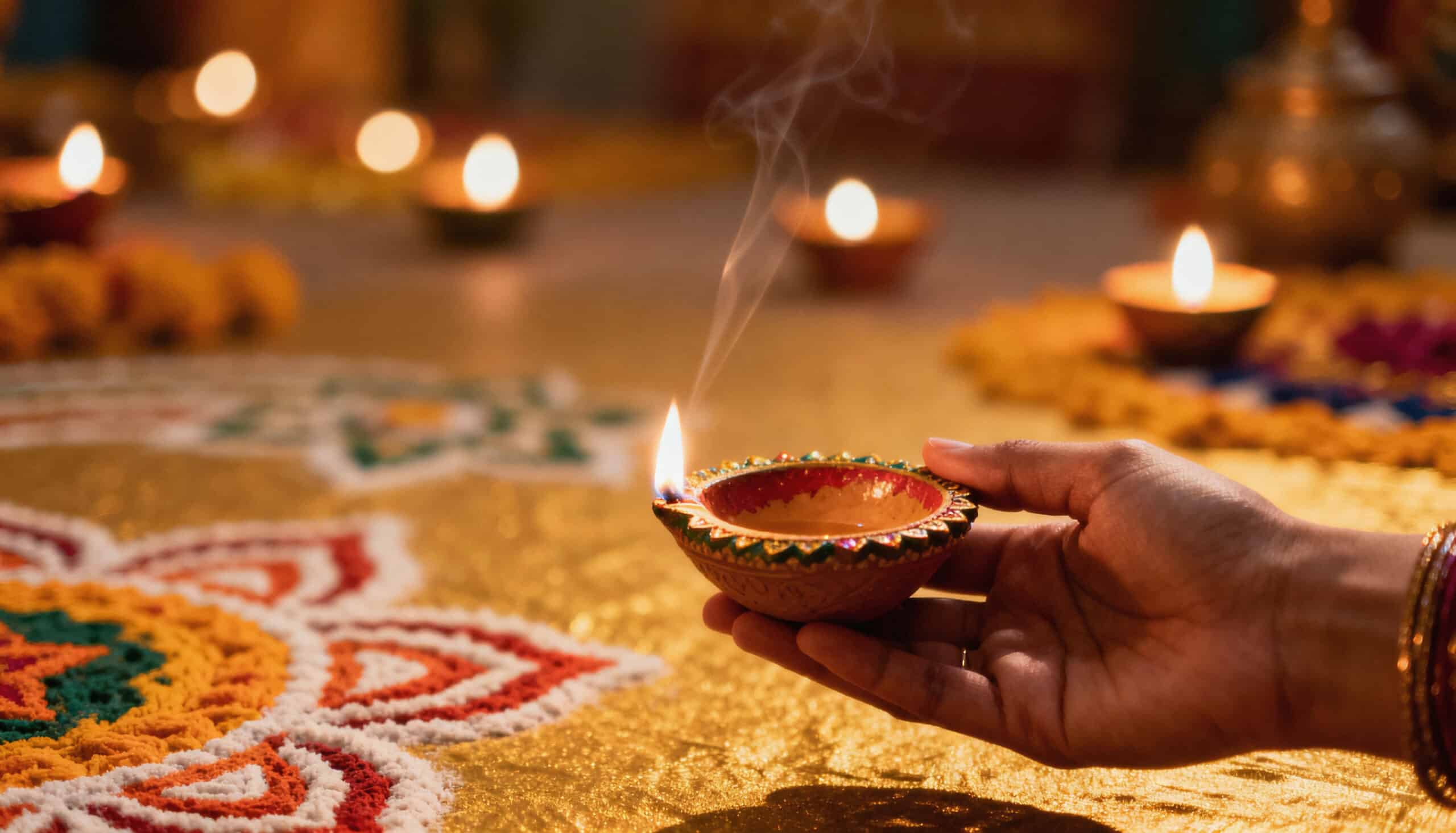
Diwalioften also called Deepavaliis one of the most emblematic festivals in India: celebrated around the new moon of October or Novembershe marks the end of the harvest and the entry into a new season. The 2025 edition saw Diwali officially join UNESCO’s “Representative List of the Intangible Cultural Heritage of Humanity”. This is a major recognition and one that justifies its cultural, social and spiritual significance.
For several days, families and communities come together. The houses and streets are cleaned and decoratedtraditional lamps (diyas) and candles are lit. We plan to fireworks and prayers are offered. Everyone comes together around meals, exchanges and gifts.